A bladder condition with negative effects on daily life, linked to various causes.
Urinary incontinence is unintentional urine leakage, and it’s essentially a symptom (not a disease) that affects quality of life, especially in the elderly (30-40%).
There are three types of incontinence. Stress urinary incontinence happens with effort or exertion, and it’s common in women after childbirth and menopause or due to gynecological conditions. Urge urinary incontinence comes with an intense feeling of urgency, and it’s linked to aging and specific health problems, often neurological. Mixed urinary incontinence is a combination of both.
Risk for experiencing urinary incontinence rises with age, starting with menopause. Other risk factors include vaginal childbirth, chronic obesity, and conditions such as overactive bladder syndrome, diabetes, and neurological disorders.
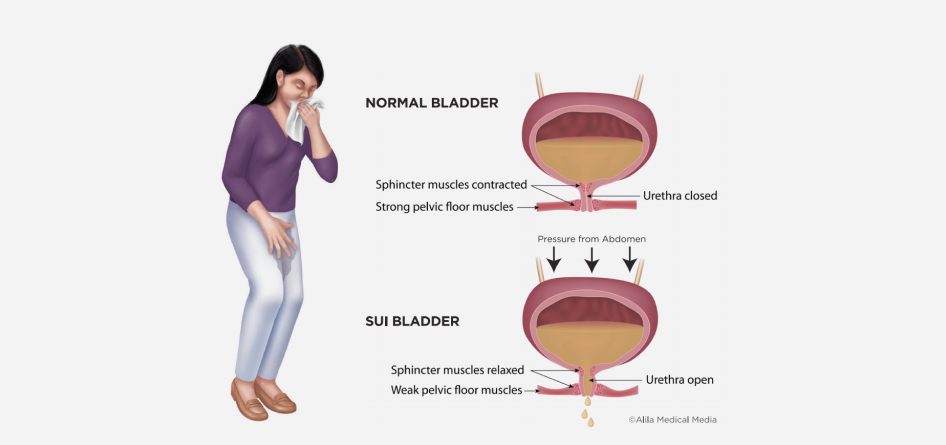
Causes for urinary incontinence vary from increased abdominal pressure or pelvic organ damage to age factors or other health conditions that need to be identified and addressed. In any case, don’t hesitate to seek professional advice if you leak a small amount of urine:
When coughing, sneezing, or laughing
When doing heavy lifting, intense labor, or exercise
After or while feeling a strong urge to empty your bladder
If the symptoms occur often, please see a specialist as soon as possible.
Urinary incontinence diagnosis focuses on identifying the type to proceed with the appropriate treatment. Furthermore, the cause may be evaluated through various exams and treated simultaneously.
Typically, urine leakage is treated conservatively, through lifestyle modifications, such as weight loss, better fluid management, cutting smoking, and avoiding constipation. Other methods include timed urination, and training the bladder and the pelvic floor muscles. In some cases, medication is administered to target specific incontinence symptoms (such as urgency).
If non-surgical treatments don’t work, a minimally invasive surgery (TOT surgery) may be necessary to add some type of support to the urethra, restoring its proper function.
For appointments, call my office every Thursday between 9.30 and 15.30.



