Non-cancerous tumors with a rare possibility for serious complications.
Uterine fibroids are benign growths in the smooth muscle layer of the womb that affect up to 70-80% of women by age 50.
There are three types based on their location. The most common are intramural fibroids, which grow within the uterine wall and may enlarge the womb. Subserosal fibroids grow out of the uterine wall and can become very large. Both can cause problems by putting pressure on adjacent organs. Submucosal fibroids grow inside the uterine cavity, often causing heavy bleeding and infertility.
Τhe exact cause of uterine fibroids remains unknown. Research has linked them to genetic predisposition (high percentage in women of African-Caribbean origin), hormonal influence (increased estrogen and progesterone), and environmental factors, such as obesity.
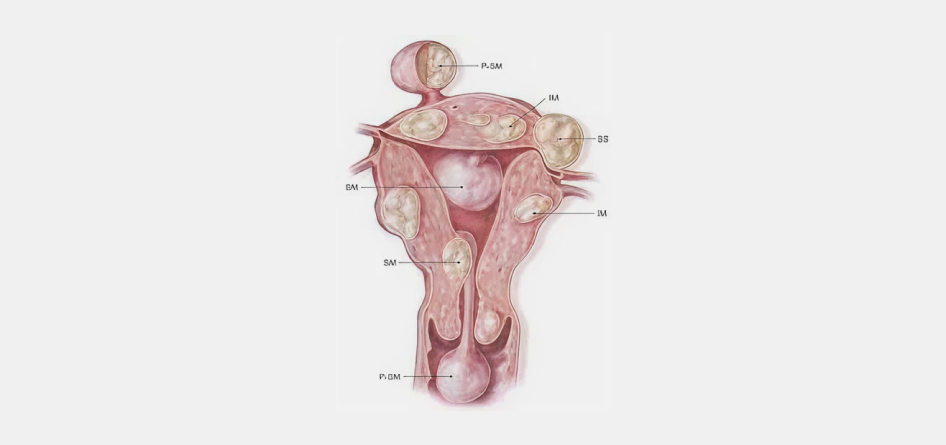
In most cases, uterine fibroids do not cause symptoms. When they do, they can be discomforting. Symptoms usually ease or disappear completely after menopause, as fibroids often shrink. More rarely, fibroids can lead to complications in fertility and pregnancy, depending on their size and location. Common discomforts are:
Heavy menstrual bleeding, irregular periods, or spotting
Pain or discomfort in the pelvic area or during intercourse
Frequent need to urinate
Constipation
If you experience severe symptoms, please see a specialist as soon as possible.
Uterine fibroids are usually diagnosed after a doctor suspects their presence and conducts the appropriate tests. Asymptomatic patients don’t require treatment, just monitoring.
Treatment depends on symptom severity, fibroid size and location, desire for future pregnancy, and menopausal status. Medicine-based therapy is the initial approach to relieve symptoms or considerably shrink the fibroids.
The need for surgical treatment may arise due to increased severity or medicine ineffectiveness. My approach is to perform a minimally invasive laparoscopic or robotic fibroid removal, either by preserving the uterus (to maintain fertility) or removing it too, as a more definitive solution. A non-surgical alternative is the use of MRI-guided focused ultrasound energy to destroy the fibroids.
For appointments, call my office every Thursday between 9.30 and 15.30.



